


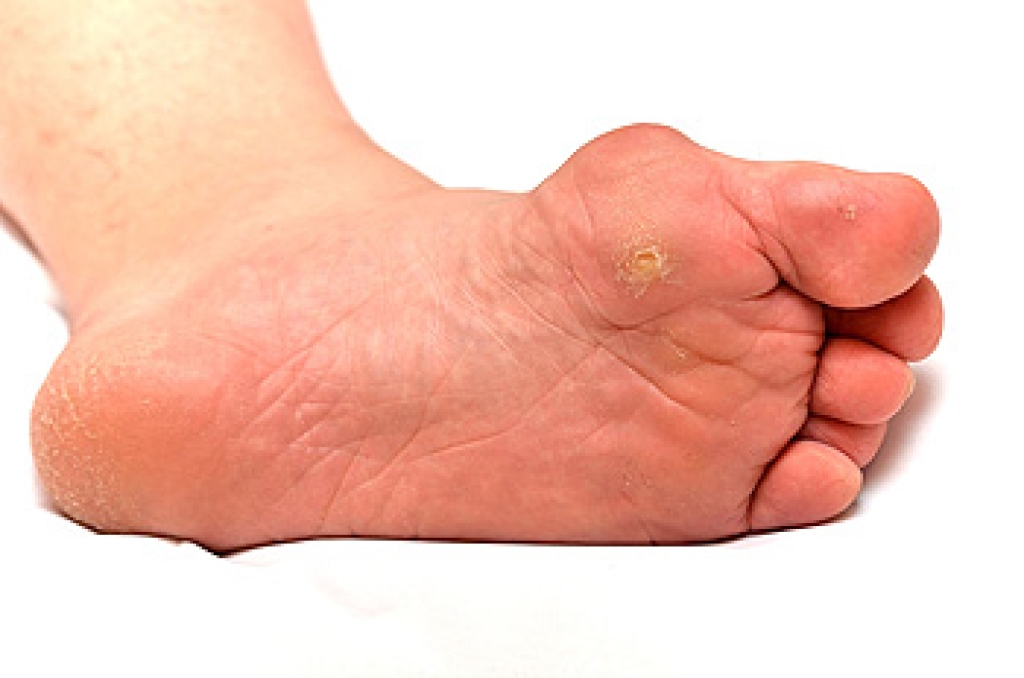
Corns and calluses both develop when the skin on the feet is exposed to repeated pressure, but they are not the same. A corn is a small, cone-shaped bump that often appears on the top of a toe, usually over a joint, and it can feel sore when touched. Corns between the toes are softer because the skin stays moist in that area. A callus is a wider, flatter patch of thick skin that often forms on the ball of the foot or the sides of the feet where weight and rubbing increase. Calluses rarely hurt unless they become very thick. A podiatrist can tell the difference by looking at the size, shape, and location of the hardened skin. Treatment options for a painful corn include reducing pressure on the toe, removing the hardened center, and safely trimming the thickened skin. If you have a painful corn on your foot, it is suggested that you schedule an appointment with a podiatrist for a diagnosis and safe, sterile treatment.
If you have any concerns regarding your feet and ankles, contact Mark Poplawski, DPM of Jersey Shore Podiatry, LLC. Our doctor will treat your foot and ankle needs.
Corns: What Are They? and How Do You Get Rid of Them?
Corns can be described as areas of the skin that have thickened to the point of becoming painful or irritating. They are often layers and layers of the skin that have become dry and rough, and are normally smaller than calluses.
Ways to Prevent Corns
There are many ways to get rid of painful corns such as wearing:
- Well-fitting socks
- Comfortable shoes that are not tight around your foot
- Shoes that offer support
Treating Corns
Treatment of corns involves removing the dead skin that has built up in the specific area of the foot. Consult with Our doctor to determine the best treatment option for your case of corns.
If you have any questions, please feel free to contact our office located in Toms River, NJ . We offer the newest diagnostic and treatment technologies for all your foot care needs.
